Daffodils.

One of the prettiest , simple flowers on the planet….

April is Daffodil Month

Wear a daffodil pin and show your support for people living with cancer

Every 3 minutes another Canadian is faced with fighting cancer. Throughout April, volunteers across Canada will be working together to raise funds for the Canadian Cancer Society.

There are many ways to join the fight against cancer this April:

  • Wear a daffodil pin for a donation
  • Buy fresh daffodils March 29 – April 1
  • Make a donation when a volunteer knocks on your door
  • Volunteer as little as three hours of your time
  • Spread the word

Show support and make a difference in your own way – no matter how big or small.

Money raised during Daffodil Month helps the Society do everything it can to prevent cancer, fund research to outsmart cancer and empower, inform and support people living with cancer.

Those pretty pins will be available  March 29 th ….by donation at A&B Photo & A&B Video…

info taken from The Canadian Cancer Society website.

Bikers in Ashcroft !

My “biker” grandsons.

The huge jumps… action shots….


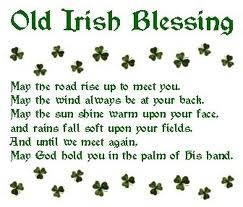
Happy St. Patrick’s Day !


St Patrick’s Day marks the feast day and anniversary of the death of a Christian missionary known as Patrick. He was born in the year 387, probably somewhere near the present day border between Scotland and England. At the age of 16, he was captured and taken to Ireland as a slave. During this period, he became very religious and after six years he fled back to his family.

Later in his life, he returned to Ireland as a missionary. He is said to have played an important role in converting the inhabitants of Ireland to Christianity and in ridding the island of snakes. However, there is no evidence that there have been any snakes in Ireland in the past 10,000 years. The “snakes” he drove out of Ireland may represent particular groups of pagans or druids. It is believed that St Patrick died on March 17 probably in the year 461 or 493 (according to different sources). St Patrick is buried under Down Cathedral in Downpatrick, County Down, and is one of the three patron saints of Ireland. The other patron saints are St Brigid of Kildare and St Columba.

St Patrick’s Day celebrations were brought to Canada by Irish immigrants. The day is a bank holiday in Northern Ireland and a public holiday in the Republic of Ireland. In the rest of the United Kingdom, the United States, Australia and New Zealand, it is celebrated, but is not an official holiday.

Symbols

The most widely-seen St Patrick’s Day symbols are the colors green, and sometimes orange, and the shamrock. The shamrock is a symbol of Ireland and a registered trademark of the Republic of Ireland. It is the leaf of the clover plant, which grows on the ground, often among grass and an Irish Catholic symbol of the Holy Trinity. It is sometimes confused with the four-leaf clover, which is a variety of the three-leaf clover and is thought to bring good luck.

(information taken from timeanddate.com)

We are part Irish . When I was younger I had bought this good luck charm for my Dad he used to take it with him when he went in hospital for different reasons .  Now I keep it for good luck !  Cute little fella isn’t he !
Peter Skene Ogden Graduation Ceremonies 2012.

The Cap and Gown ceremony for the 100 Mile House P.S.O. graduates will be on May 25th and the Prom will be on May 26th at the South Cariboo Recreation Center 2-175B Airport Rd.

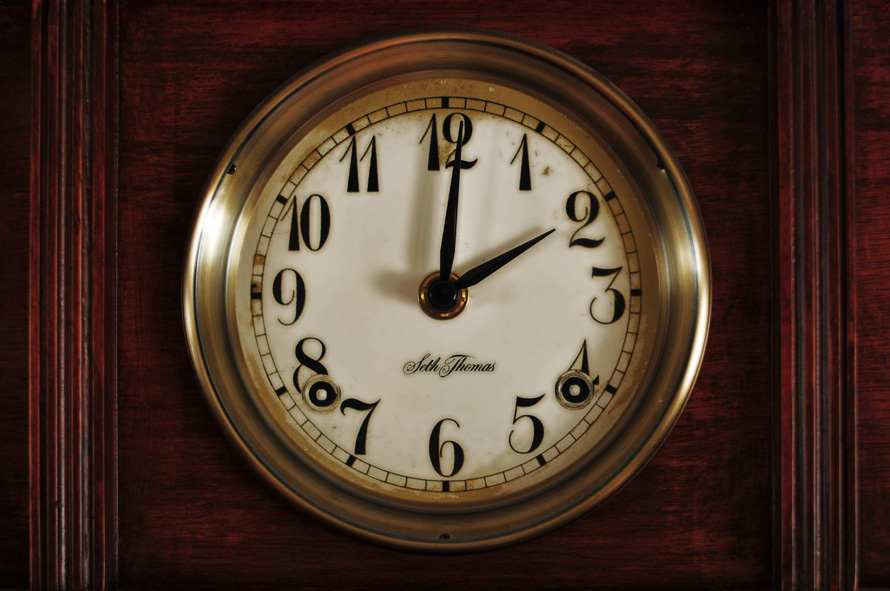
We “Spring” forward one hour this Saturday night March 10,2012.


Daylight Saving Time – often referred to as “Summer Time”, “DST” or “Daylight Savings Time” – is a way of making better use of the daylight by setting the clocks forward one hour during the long days of summer, and back again in the fall

Brief history of DST

Benjamin Franklin first suggested Daylight Saving Time in 1784, but modern DST was not proposed until 1895 when an entomologist from New Zealand, George Vernon Hudson, presented a proposal for a two-hour daylight saving shift to the Wellington Philosophical Society.

The conception of DST was mainly credited to an English builder, William Willett in 1905, when he presented the idea to advance the clock during the summer months. His proposal was published two years later and introduced to the House of Commons in February 1908. The first Daylight Saving Bill was examined by a select committee but was never made into a law. It was not until World War I, in 1916, that DST was adopted and implemented by several countries in Europe who initially rejected the idea.


Info taken from timeanddate.com